Does Expired Spice Actually Go Bad? The Truth About Shelf Life in Your Spice Cabinet
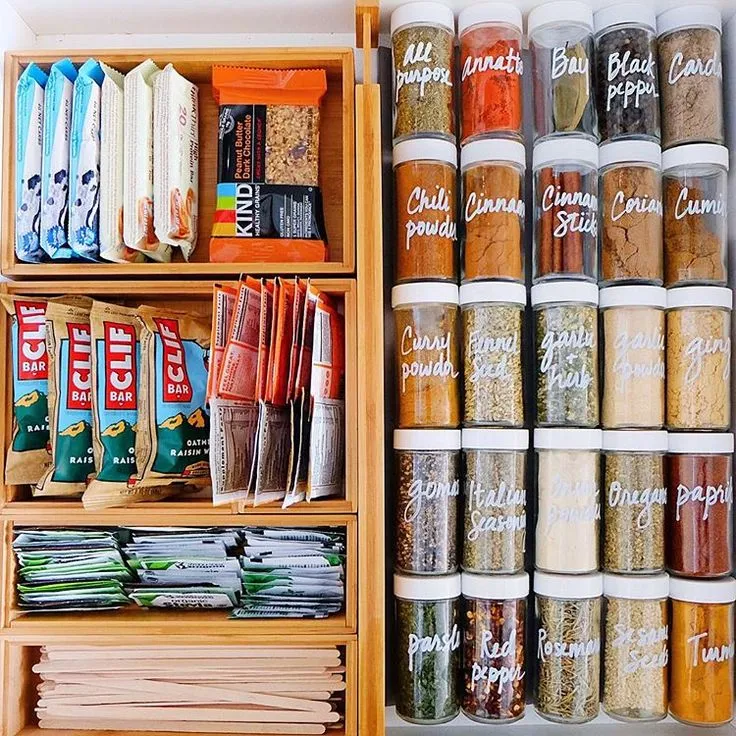
Photo: organized spice cabinet jars with labels close up pantry storage, via i.pinimg.com
Open almost any American home's spice cabinet and you'll find at least one jar with a "best by" date that expired during a previous presidential administration. Maybe it's that bottle of ground cloves you bought for one holiday recipe. Maybe it's the celery salt that came with a spice rack set as a gift. You keep it because — well, it's not bad, right? It's just old.
Here's where things get interesting: you might be right. Or you might be cooking with flavor ghosts. The truth about spice expiration is more nuanced than the date stamp on the bottom of the jar, and understanding it can save you money, improve your food, and help you stop second-guessing every pinch.
What "Expired" Actually Means for Spices
Let's get one thing out of the way immediately: dried spices don't spoil in the way that milk or meat does. There's no bacterial growth, no toxin production, no food safety risk sitting in that jar of oregano from 2017. When a spice "goes bad," what's actually happening is a gradual loss of the volatile compounds — the essential oils and aromatic molecules — that give it flavor and aroma in the first place.
In other words, expired spice isn't dangerous. It's just tired.
The "best by" dates printed on spice jars are manufacturer estimates for peak potency, not safety cutoffs. Spice companies set these dates conservatively, often at two to four years for ground spices and three to five years for whole ones. But how quickly a spice actually degrades depends on a whole set of variables that the label doesn't account for: how it's stored, how often the jar is opened, whether it lives next to your stove or in a cool dark drawer.
The Science Behind the Fade
Flavor in spices comes primarily from volatile aromatic compounds — terpenes, aldehydes, ketones, and essential oils. "Volatile" means they evaporate over time, especially when exposed to heat, light, air, and moisture. Every time you open a jar, a little bit of that aroma escapes. Every time a spice jar sits near a warm burner, the degradation accelerates.
Ground spices lose potency faster than whole ones because grinding dramatically increases the surface area exposed to air. A whole cinnamon stick might hold its flavor for four or five years under decent storage conditions. Ground cinnamon? More like two to three years, and that's being generous.
Some compounds are more stable than others, which is why certain spices age better. Capsaicin — the compound responsible for heat in chiles — is relatively stable and doesn't fade as quickly as the more delicate floral or citrusy aromatics. That's why a jar of cayenne might still pack a punch long after the subtle complexity of something like cardamom has gone flat.
The Sniff-and-Rub Test: Your Best Diagnostic Tool
Forget the date on the jar. Here's how to actually tell if a spice is still worth using:
Step one: Open the jar and smell it immediately. Does it hit you with a clear, recognizable aroma? Or do you have to really concentrate to detect anything?
Step two: Pour a small amount into your palm and rub it briskly between your hands to warm it up. Heat activates those volatile oils. Smell again.
If the scent is vivid and distinct, the spice is still doing its job. If you're getting a vague, papery, or stale smell — or nothing much at all — it's time to replace it. You can also taste a tiny pinch. Fresh spice should have immediate impact on your palate. Old spice will taste muted, dusty, or one-dimensional.
This test works for almost everything except whole dried chiles, which you should inspect visually for mold or insect damage before using.
Which Spices Age Like Wine (And Which Fade Fast)
Not all spices are equally vulnerable to time. Knowing which ones hold up helps you prioritize what to replace first.
Holds up well over time:
- Whole peppercorns — the cell structure protects the flavor compounds
- Whole dried chiles — relatively stable if kept dry and away from light
- Coriander seed — more resilient than most
- Bay leaves — lose some fragrance but retain functional flavor for years
- Salt — technically not a spice, but worth noting: it never expires
- Red pepper flakes — heat stays longer than delicate aromatics
Fades relatively quickly:
- Ground cumin — earthy base notes dissipate within a year or two of grinding
- Cardamom — its floral, citrusy complexity is highly volatile
- Ground cinnamon — loses warmth and sweetness faster than the stick form
- Dried herbs in general (basil, tarragon, dill) — more delicate than spices and prone to dustiness
- Pre-made spice blends — the weakest link in the blend sets the pace for the whole jar
The wild card: Paprika. It's often overlooked, but paprika — especially the smoked variety — can go rancid if stored improperly because of its oil content. Rancid paprika has a distinctly unpleasant smell, almost crayon-like. If yours smells off, don't try to use more of it to compensate. Toss it.
Storage: The Biggest Variable Nobody Talks About Enough
The spice rack mounted on the wall next to your stove looks great. It's also probably the worst place to store spices in your entire kitchen.
Heat, light, and humidity are the three enemies of spice longevity. A spot near the stove gets all three. The ideal storage location is cool, dark, and dry — a drawer away from the cooktop, a cabinet that doesn't sit above the oven, or even a dedicated shelf in a pantry.
Other storage habits that make a real difference:
- Use a spoon to measure rather than shaking the jar directly over steam
- Make sure lids are fully sealed after each use
- Avoid storing spices in clear glass containers near a window
- If you buy in bulk, keep the main supply sealed in a cool location and transfer smaller amounts to your everyday jar
Airtight containers help significantly. If you've transferred spices into decorative open-top jars, they'll degrade faster than their sealed counterparts — pretty, but not practical for long-term storage.
When to Replenish — and When to Double Up
If your spice has lost some potency but isn't completely dead, you have options. You can use more of it — roughly one and a half times the recipe amount — and compensate for the fade. This works reasonably well for background spices in a long-cooked dish where other flavors are building complexity. It works less well for delicate applications where that spice is a featured player.
For anything where a spice is front and center — a single-spice rub, a finishing sprinkle, a spiced dessert where cardamom or cinnamon is the star — freshness matters more. Invest in a new jar.
A practical approach: do a full cabinet audit once a year. Smell everything. Replace what's faded. Buy whole spices when you can and grind them yourself for maximum potency. And stop feeling guilty about that jar from 2019 — just test it before you cook with it.
Your food will thank you.