No Cumin? No Problem. How to Think Your Way Through Any Missing Spice
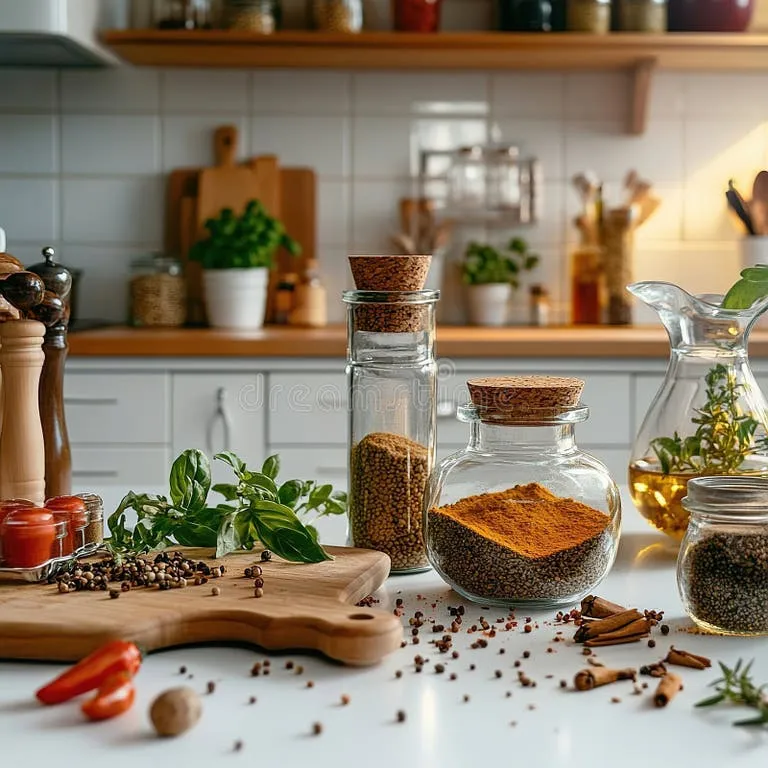
Photo: assorted spice jars open on kitchen counter with herbs and cooking ingredients, via thumbs.dreamstime.com
It happens to everyone. You're halfway through building a marinade, the chicken is already defrosting on the counter, and you reach into the cabinet only to find an empty jar where your cumin used to be. Panic sets in. Do you run to the store? Skip it entirely? Guess?
Here's the thing: great cooks don't just memorize substitution charts. They understand why a spice is in a recipe in the first place — and that knowledge is what lets them improvise without wrecking the dish. Once you get comfortable thinking about flavor in terms of its components, your whole pantry opens up as a toolkit.
Let's break it down.
First, Ask What Job That Spice Is Doing
Every spice in a recipe is pulling at least one of a few different levers: warmth, earthiness, brightness, heat, floral notes, bitterness, or depth. Before you can swap anything out, you need to figure out which lever it's pulling in your dish.
Take cumin, for example. It's earthy and slightly smoky with a warm, almost nutty edge. In a taco seasoning blend, it's providing that deep, savory backbone. In a North African spice rub, it might be doing the same but playing against brighter notes like coriander. In both cases, you're not just looking for "something that tastes like cumin" — you're looking for something that delivers similar depth.
That reframe changes everything.
The Flavor Family Framework
Think of spices as belonging to loose flavor families. When you're missing one, you want to pull from the same family — or thoughtfully blend two spices that together cover the same ground.
Warm and earthy: Cumin, caraway, coriander (seed), smoked paprika. These are the backbone spices. If you're out of cumin, caraway is surprisingly close — it's got that same slightly bitter, anise-adjacent earthiness. Use a little less, since caraway can be more assertive. Smoked paprika won't taste the same, but it'll fill the warmth-and-depth gap if earthiness isn't the primary goal.
Bright and citrusy: Coriander (ground), sumac, turmeric, cardamom. Coriander seed is one of the most underrated swap artists in the game. It brings citrusy lift and a floral quality that works anywhere the recipe wants brightness. Out of sumac? A squeeze of lemon zest plus a pinch of salt gets you surprisingly close.
Heat providers: Cayenne, red pepper flakes, white pepper, black pepper, chipotle powder. These aren't interchangeable by ratio, but they all deliver heat with different personalities. Cayenne is clean and sharp. Chipotle brings smokiness along for the ride. White pepper is sneaky — it builds heat slowly and works especially well in cream sauces or anything where you don't want visible specks.
Floral and complex: Cardamom, allspice, cloves, star anise. This family requires the most careful hand. These spices are easy to overdo, and their flavors are distinct. But if a recipe calls for a small amount of allspice and you don't have it, a tiny pinch of cloves plus a tiny pinch of cinnamon will approximate that same warm, slightly mysterious quality.
When to Blend, When to Go Solo
Sometimes a single substitute isn't the answer — a small combination is. This sounds more complicated than it is.
If you're out of garam masala, for instance, you're not going to replace it with one spice. But a quick blend of cinnamon, coriander, cumin, and a whisper of cloves gets you into the same neighborhood. It won't be identical, but it'll have the warm, layered complexity the recipe is reaching for.
Similarly, Chinese five spice is a blend you can approximate with star anise, cinnamon, cloves, fennel seed, and Szechuan pepper. Miss one of those? The dish still works if the other four are present — the balance just shifts slightly.
The key is proportion. When you're building a substitute blend on the fly, start with less than you think you need and taste as you go. You can always add more; you can't take it back.
The Texture and Timing Factor
Here's something substitution charts almost never mention: whole spices and ground spices don't behave the same way in a recipe, even if they're the same ingredient. And that matters when you're swapping.
If a recipe calls for whole mustard seeds (which pop and release flavor slowly during cooking) and you only have ground mustard, add the ground version later in the cooking process and use less of it. Ground spices release their flavor faster and more intensely. Going the other direction — using whole spices when the recipe wants ground — means you'll need to either toast and crush them first, or accept that the flavor will be more subtle and unevenly distributed.
This timing awareness also applies when you're using fresh herbs as a substitute for dried spices, or vice versa. Fresh herbs are higher in moisture and more volatile — they lose their punch quickly with heat. Dried versions are more concentrated. The general rule of thumb is 1 teaspoon dried for every tablespoon fresh, but pay attention to when you're adding them.
A Few Favorite Real-World Swaps
To make this concrete, here are some of the most common swaps home cooks run into:
- Out of smoked paprika? Use regular sweet paprika plus a drop of liquid smoke, or regular paprika plus a pinch of chipotle powder.
- No turmeric? A small amount of saffron (if you have it — it's pricey) or even a pinch of mild yellow curry powder can stand in for color and mild earthiness.
- Missing fennel seed? Anise seed is the closest substitute, though slightly sweeter. A small amount of tarragon in a pinch if you're cooking a French-inspired dish.
- No cinnamon? Allspice or nutmeg can fill a similar warm-sweet role in baked goods, though both are more intense — use about half the amount.
- Out of dried oregano? Marjoram is its mild cousin and works beautifully. Thyme is another solid option, especially in tomato-based dishes.
Build the Instinct, Not Just the List
The real goal here isn't to hand you a cheat sheet — it's to help you build the kind of flavor intuition that makes cooking feel less like following instructions and more like having a conversation with your ingredients.
Spend a little time smelling your spices individually. Toast a pinch of something and notice how the aroma changes. When you understand what each one brings to the table, swapping becomes less guesswork and more craft.
Your pantry is more flexible than you think. Trust it — and trust yourself.